Tuesday, 31 January 2012

Observer Articles

The Observer is widely known as offering respectable, educated opinions on the culture of Film and British Film. Because of this I have decided to explore some of their articles in order to gain an insight into a professional view on films, which may be helpful in inspiring the distribution and production of our own short film.

The BAFTAs - 'The Artist'

The BAFTAs, or British Academy of Film and Television Arts, are a British charity that hosts an award ceremony annually. They reward excellence, and promote new talent within the country, making them very important in terms of recognition. The fact that 'The Artist' was awarded one of these prestige awards shows that films produce in the modern era do not necessarily have to comply with expected stereotypes. This is inspirational in terms of our own film, as although our film will not be silent like 'The Artist', it will have no dialogue and a lack of special effects. This use of breaking the stereotype should prove effective to audiences, as 'The Artist' has shown. 


Silent Films

This article also looks at 'The Artist', but explores the effects of silent films on a deeper level. The article says, "Of all the many strengths of Michel Hazanavicius's film, the absence of words is the greatest. No words means no reliance on a form of communication that isn't, in fact, anything like as effective as we think. The language of gesture often says more – and it's always more passionate." This shows that for our film to be as effective as possible, we will have to utilise the importance of body language within the production, as this is an effective tool of communication


British Film as a Global Brand


I found this article and thought that it was relevant to 'Flight', as the distribution of the film will only be within the United Kingdom, meaning that less money will have to be spent, although it reduces the size of audiences dramatically. David Cameron himself said that the UK Film Industry, particularly the British Film Industry, should financially back "more commercially successful pictures". This is due to the recent success of 'The King's Speech', directed by Tom Hooper. It had a budget of $15 million, and took a staggering $414 million. It's success is due to the fact that it features well known names - such as Helena Bonham Carter and Colin Firth, and that it captures the sense of British spirit. If other British films similar to 'The King's Speech' were to funded appropriately, it could mean a massive success in terms of profit, which will, in turn, help the economy of the country. The article also states that "The review, which will be unveiled on Monday , is also likely to propose a system that allows the profits from successful films to be fed back into the industry. Such a scheme would see a percentage of box-office receipts paid back into the lottery fund in cases where producers had received an initial grant." This means that the money made from the profits of British film can be funded back into the industry, meaning that Britain can be a competitor with the Hollywood film industry which has dominated the globe.

Thursday, 19 January 2012

During Filming - Colour Issues

When filming the footage I could see that colours differed in two of the different shots, due to the quick change of the natural lighting which we were relying on. As cinematographer, I decided to shoot both of the scenes so that our editor, Hannah, and I could choose which one she felt was most appropriate for our production. On reflection, I feel as though the second shot has better lighting and colour, due to the warmer tones of the footage, which creates a homely atmosphere. This adds a sense of safety for Sophie in the homely atmosphere. The blinds are also more defined in the second shot, which is important in representing Sophie's confinement. Both myself and the editor of the film decided to edit out the first shot, and only incorporate the shot which shows the homely glow.

Shot #1

Shot #2 

Tuesday, 10 January 2012

'Sweet Sixteen' Poster Analysis

The film 'Sweet Sixteen', directed by the award-winning Ken Loach, falls into the social realist genre due to it's gritty representation of reality. It deals with themes of drug culture and the representation of youths, which is similar to my own short film 'Flight'. Because of the reasons given, I feel that it will be effective to analyse this poster. This will allow me to see the expected forms and conventions of social realism posters. From there, I will then decided whether to conform to or break the expectations of the viewer.

The most notable aspect of the poster for the social realist film 'Sweet Sixteen' is the protagonists' - Liam's, face. It takes up the majority of the space on the poster, which shows that he will be in control of the narrative throughout. This effectively lets the viewer know who will be the protagonist of the film before they have even viewed it. This allows the audience to create connections to the character. The tag-line underneath the image of Liam's face "Life... it's about to hit the fan!" shows that changes to Liam's life will be the main driving force of the narrative. This shows to the viewer that it deals with issues about the lifestyle of youths within Britain today. I feel that it is important to allow the viewer an insight into the narrative of the film through the poster product, as it will engage them deeper within the film. However, the tag-line could be considered to be slightly cheesy. This takes away from the otherwise professional-feel from the poster, and deduces from the social realism genre which is shown throughout, despite the insight into the themes which reside within the narrative. The logo of the film also takes up a lot of the room of the poster. This draws the viewer's attention to it. Also, the black colouring of the logo contrasts with the rest of the colours on the poster, which is effective. I will consider placing a large logo with contrasting colours on my own poster product, to ensure that the viewer's attention is drawn directly to it. However, it is important to ensure that the logo does not stand out too much, and that it fits in with the house-style. This will make the product effect yet professional-looking. The award placed at the top-right of the poster shows to the viewer that it is academically-acclaimed, which may entice the viewer into seeing the film. I will consider putting awards on the poster for my film to ensure that it is seen by the most amount of viewers possible. The yellow images at the bottom of the poster allow an insight into the actual film. This matches the house-style of the product, as the colouring of the images are yellow like the award and the director information. Putting images from the actual film on the poster is effective as it allows the viewer to connect with the film before they have even seen it. However, the four images shown can deduct from the overall primary image. I think that it would be more effective if only one image was shown on the poster, which I shall do for 'Flight'. I will consider using the primary image on my poster to ensure that audiences feel connected to the film.

Monday, 2 January 2012

Qualitative Research

From looking at the audience research we conducted previously, it was clear that the responses given did not greatly benefit my production. The audience interviews resulted in closed answers, due to the general amount of close questions asked. Due to these closed responses, there was only so much that we could change about our production. The questions asked were focused towards more of a quantitative research style, as opposed to qualitative. Quantitative research focuses on gaining mass responses of closed answers, whereas qualitative focuses more towards gaining long, precise answers, although in a fewer number. Using quantitative research resulted in the people we interviewed not going into depth about what they did or did not like about the film or what they expected to see within the social realist genre, meaning that 'Flight' did not benefit as much as it could have from the research conducted. To combat this issue, we decided to conduct some qualitative research. We questioned around 5 to 6 people within a focus group. Doing this amounted to a wide range of views and opinions given, who went into detail about the questions asked. The questions that we asked the focus group are shown below. As you can see, many of the questions asked feature the words 'why'. This urges the audience to expand on their point.


1. What issues would you expect to be covered in a social realist based film with the underlying theme of drug use?

2. What characters would you expect to see in a short film of this type, why?


3. What locations do you feel would be appropriate to use in a production of this sort, why?


4. What type of emotion do you expect to feel when watching a production of this sort, why?


5. What type of moral message do you expect the audience to be left with after watching a production focused on narcotics?


6. What editing techniques do you feel would be appropriate in a production of this sort?


7. Do you think that the film should have a realistic or more surreal element to it, why?


8. What kind of sound do you expect to be used to portray meaning to the audience?


Above are two members of our focus group responding to our qualitative research questions.

From conducting this qualitative research, it has clearly outlined the expectations of the social realist genre. This has greatly helped the production of 'Flight' as we know now what to include within our film to ensure that it effects audiences and viewers. The moral message is clear to have been to show the negative side of focusing on narcotics, which we will be sure to include within the narrative. It is also clear that youths are a key age grouping for the social realist genre, meaning that we will be sure to focus on this theme.


Photography Inspiration

I have decided to look at photographers for inspiration. One particular photographer that caught my eye was 'Lee Miller', a surrealist photographer based in Paris in the 1920s/30s. She was born in New York in 1907, and died in 1977. Below are some of the examples of her work:


I thought that her photography was very effective and appealing to the eye. This is mainly achieved through basing her products on having two solid colours - dark grey/black and a light grey. This allows the viewer to focus their eye on the two contrasting objects that Miller is trying to convey. I really like this idea of binary opposites, and I feel that portraying it through the use of colour and lighting is very effective. As cinematographer for 'Flight', I will use a similar technique to portray Sophie's split lifestyle, through use of shadows and landscape (as shown above).

Tuesday, 20 December 2011

Vimeo/Youtube Comparison

Youtube
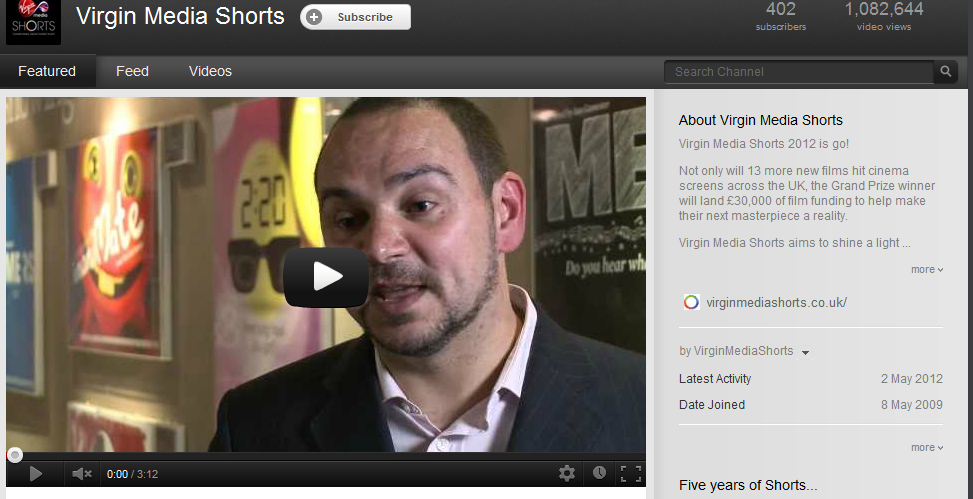
Youtube is the most popular video-sharing website on the internet in the world. It allows anyone to upload videos from a wide range of video formats. This means that it is an extremely accessible platform to upload a wide range of films. Many short film makers use Youtube to distribute and exhibit their products, as it not only hosts videos, the website also allows people to communicate over the video through the commenting tool. This means that people can post comments on the actual video to ensure that they give the creator's opinion effectively. The owner of the video can then reply to these comments, and so on. This will mean that, upon redrafting the project, many different views and opinions can be given from the target audience of 'Flight' to ensure that it is the best quality it can possibly be. The quality of Youtube videos are also another advantage of using the hosting site. The clips can be viewed in HD, meaning that the viewer can view the footage in high quality and that they will be able to see everything within the frame without it being of a low quality. Youtube also allows clips to be exported directly onto social networking sites like Facebook and Twitter. This means that they can be shared with a wider audience and that many different people will have the access to see the footage which is being uploaded. Youtube allows users to annotate the clips uploaded. This means that they are able to communicate with the viewer about key scenes within the narrative. Furthermore, there are many channels on Youtube which are dedicated solely to short films. An example of this is the VirginMediaShorts channel, shown below. Each year the channel hosts a competition to find the best short film available. Users can upload their short film project onto the site to be entered into the competition. This means that by uploaded 'Flight' onto Youtube, I will be able to communicate with other short film fans via this channel to gain a wide range of insights into how the film can be improved.

VirginMediaShort Youtube Channel.

Vimeo
The site Vimeo is another popular destination for film maker's to upload their footage. The website is solely based on creation, whereas Youtube has a wider range of products. This means that there may more of a response from videos on Vimeo, as the footage will be more accessible. Vimeo offers a higher quality service than Youtube, meaning that the viewers of the footage will be able to see all of the footage at ease, in the original format in which it is meant to be seen. This means that the video will be able to communicate mise-en-scene more effectively. Vimeo, like Youtube, allows clips to be shared onto a range of sites. However, the range of websites is very limited, especially when compared to Youtube. The website only offers the user an embed code, meaning that the clip may not be able to be shared on popular social networking sites like Tumblr and Twitter. This will have a negative effect on my production as I will not be able to gain as many views and opinions as if it was shown on Youtube. Vimeo has a lower storage allowance than Youtube, meaning that if I want to show many different drafts of the film, I may not be able to. If I use Youtube, however, then this may change. However, Vimeo does appeal to a more creative audience, as opposed to the amateur videos uploaded which have no relevance to the film industry.

A screen shot of a film on Vimeo.


Conclusion
In conclusion, I have decided that my short film 'Flight' will be uploaded onto the popular website Youtube. However, despite the fact that Vimeo appeals to a much more creative audience, I feel that Youtube will be the perfect destination for 'Flight' to be uploaded onto. This is because I will be able to gain a wide amount of views and opinions from users, which can then be used to shape the future re-drafts of my film. Youtube also has a larger storage capacity than Vimeo, which will benefit 'Flight' as I can upload many different drafts of my film, shaped by the feedback given to me by users. Feedback can also be more easily received from other social networking sites such as Tumblr and Twitter, which Youtube can connect to at ease.

Saturday, 17 December 2011

Editing Short Film Analysis

Although I am the cinematographer for my short film, it is highly important that the length of shots is taken into consideration whilst I am shooting the shots required. The use of editing is just as important at conveying meaning to the audience as mise-en-scene, cinematography and sound, although it is more closely linked to cinematography. I will ensure that the editor of my group, Hannah, and I work closely together to ensure that the edited version of the shots I shoot conform to my desired vision. Due to the reasons listed above, I have decided to analysing the editing used within the short film 'Thoughts of a Dead Atheist'. This film has darker themes which link to the social realism genre, meaning that it will be beneficial to my own production for me to analyse, as it will outlay some of the social realism conventions which I may be expected to follow.

Above is the short film that I am going to analyse.

The opening shot of a film is arguably the most important of the whole production. This is because it immediately shows the viewer the themes which reside within the film, and introduce the protagonist to the audience. The opening shot of 'Thoughts of a Dead Atheist' lasts for an extremely long amount of time, amounting to a total of around 20 seconds. The character in the centre of the frame walks away from the camera down a narrow pathway in this amount of time. Although this shot looks visually appealing, and that it introduces the audience to the film effectively, I feel that this shot lasts for a too long duration of time. I will ensure that Hannah edits any of the longer shots I shoot to a smaller amount of time. This will keep audiences engaged with the production and will make them want to know what is going to happen next within the narrative. The following shot, where the man in question encounters another character, lasts for around 8 to 9 seconds. This shorter duration is more effective than the previous 20 second shot, as it keeps audiences engaged by showing them numerous different types of dialogue as the two characters exchange dialogue. Throughout the film shots of around 7 -8 seconds are used. I feel that some of the shots could have been reduced further, as some shots have little relevance to the meaning of the plot yet are shown anyway. This may result in audiences becoming bored whilst watching the short film, meaning that the overall effect of the production is ruined. To avoid this from happening, I will ensure that the shots within 'Flight' are only the necessary amount of time, and that the narrative progression does not drag on for too long. Another important aspect of editing is the use of altering the original colour of the shot. This is shown in the short film above by the use of black and white. However, the red scarf worn by one of the characters is still shown. This shows the importance of this character and hints at the connotations that the colour holds. I will ensure that I work closely with the editor of my film in case she decides to change any of the colour of the shots. We will work together to make sure that any colour alterations are effective.